Those Black Streaks on Your Roof: What the Algae Really Is
You've noticed the dark stripes running down your roof and assumed it's just dirt or soot. Most people do. Then you scrub at a bit you can reach and it barely shifts, and you start to wonder what it actually is.
Those black streaks aren't grime off the road or muck from a passing storm. They're alive. Understanding what's really growing up there helps you see why it spreads the way it does across a Carlisle roof, and why a quick rinse never sorts it for long.
The quick answer: Those black streaks are algae, usually a type called Gloeocapsa magma, a living organism that feeds on the roof surface and spreads in damp, shaded conditions, so it needs a proper treatment to kill it rather than just a wash.
1. The Streaks Are Algae, Not Dirt
The dark stain spreading down your tiles is a colony of algae, and the common culprit is one that carries a dark, almost sooty coating to shield itself from sunlight. That's the black you're seeing. It's a living thing, quietly growing and multiplying across the surface.
This is why the stain has that streaky, top-to-bottom pattern. The algae starts higher up, often near the ridge, and every time it rains the spores wash down the slope and spread the colony further. On a damp Carlisle roof there's plenty of rain to carry it along.
2. Cumbria's Climate Is Made for It
Algae wants three things: moisture, shade, and something to feed on. Carlisle serves up all three. Sitting where the Eden, Caldew and Petteril meet, with wet air pushing in off the Solway and the Irish Sea, the city gives roofs very little chance to dry out between downpours.
The north and east-facing slopes are worst hit. They catch the least sun, so the surface stays damp for days. Add the shade from tall Victorian terraces and mature trees around Stanwix and Botcherby, and you've got the exact conditions algae loves.
3. What It Actually Feeds On
Modern concrete tiles contain limestone filler, and the algae grazes on it happily. That's why newer estates around Kingstown and Harraby often show streaks within a few years of the tiles going down. The roof itself is the food source.
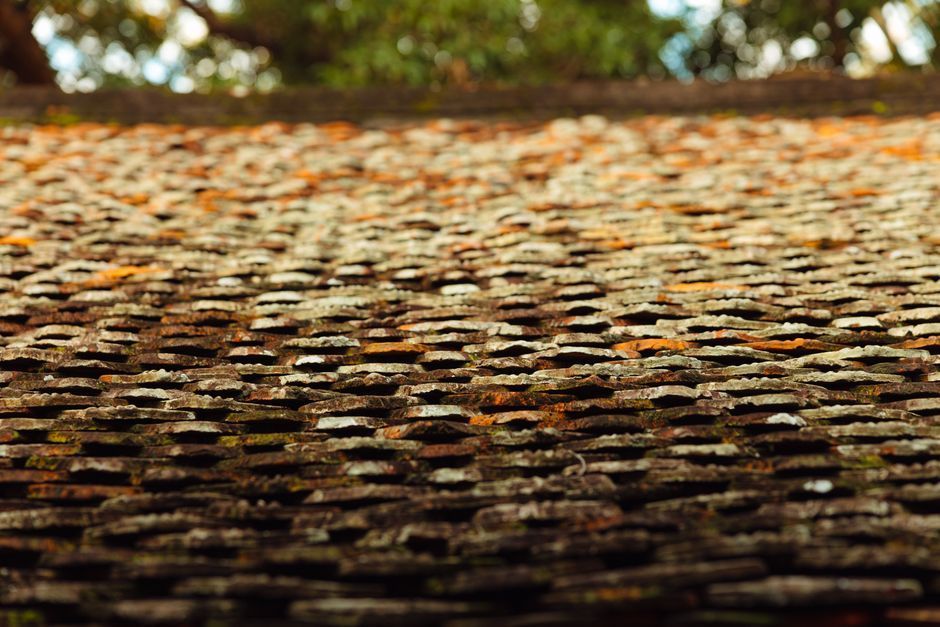
Older slate roofs aren't immune either. Slate doesn't feed the algae the same way, but grime, pollen, and moss debris build up in the surface texture and give it something to cling to. Once a colony gets a foothold on a shaded slate slope, it holds on hard.
4. It's More Than a Cosmetic Problem
The obvious issue is how it looks. A streaky black roof drags down the whole house, and on a smart red sandstone terrace the contrast is stark. But there's more going on underneath the stain than a bit of lost kerb appeal.
The algae mat holds moisture against the roof surface, keeping tiles damp long after the rain stops. In a Carlisle winter, that trapped water freezes and thaws over and over, working at the tile surface. Damp conditions also invite moss to move in on top, which makes the whole situation worse.
5. Why Scrubbing and Rinsing Fail
Blast the streaks with a jet wash and they might fade for a while, but you've only knocked back the surface. The algae is rooted into the tile, and any spores left behind restart the colony. Within a season or two the streaks creep back down the slope.
Worse, aggressive cleaning damages the roof while barely touching the cause. High pressure strips the tile surface and pushes water where it shouldn't go. You end up with a harmed roof and algae that returns anyway, which is the worst of both.
6. How a Soft Wash Sorts It Properly
The method that works is a soft wash. Low-pressure water carries a biocide across the roof, and the treatment kills the algae at the root rather than just wiping the surface. Over the following weeks the dead growth weathers away and the stain fades for good.
Because the biocide kills the colony instead of scattering it, the roof stays clean far longer than any scrub. On the damp, shaded slopes so common around the city, that lasting kill is the difference between a real fix and a job you repeat every spring. Over 15 years of treating Carlisle roofs, soft washing is the approach that holds up.
- What it is: Living algae, often Gloeocapsa magma, not dirt or soot.
- Why streaky: Rain washes spores down the slope from the ridge.
- Where worst: Shaded north and east-facing slopes that stay damp.
- Its food: Limestone filler in concrete tiles and grime on slate.
- The fix: A low-pressure soft wash with a biocide that kills it at the root.
Frequently Asked Questions
Are the black streaks dangerous to my roof?
Over time, yes. The algae traps moisture against the tiles, which feeds freeze-thaw damage in winter and invites moss to grow. It won't collapse your roof, but left alone it shortens the roof's life.
Will the streaks come off with a normal jet wash?
Only briefly. Pressure washing knocks back the surface but leaves the spores, so the algae grows back within a season or two. It also risks damaging the tiles in the process.
Why does my neighbour's roof have them but mine doesn't?
Usually it's about aspect and shade. North or east-facing slopes and roofs shaded by trees or taller buildings stay damp longer, so they grow algae first while sunnier roofs stay clear.
Do the streaks always start at the top?
Often, yes. The colony tends to take hold near the ridge, and rain carries spores down the slope, which is what creates the streaky, top-to-bottom look you see on so many roofs.
How long does a soft wash keep the algae away?
Far longer than a scrub, often a few years, though damp Carlisle slopes can need a top-up sooner. The biocide kills the colony properly, so regrowth is slow rather than immediate.
Tired of looking at black streaks?
Ben's Roof Cleaning handles roof cleaning, moss removal and gutter cleaning across Carlisle and Cumbria, with over 15 years of experience. Get in touch or call 07889 127153
for a free, no-obligation quote.
Kill the Colony and the Streaks Go for Good
Once you know the black is a living thing feeding off your roof, the fix makes sense. You're not cleaning a stain, you're killing a colony. Treat it properly with a soft wash and the streaks fade and stay gone, instead of creeping back down the slope every damp Cumbrian spring.